
Our Green Story: Banceithin Farm & Holiday Cottages.
Posted • April 3, 2023
In buying Banceithin and moving to West Wales, we hoped to slow down, downsize, live more sustainably, and generally remember how to appreciate the simpler things in life. Like many other people before and after us, the early River Cottage television series and books were our inspiration. The reality has proved to be very different and, at times, hard work, but more rewarding than we could ever have hoped it would be. Our main focus has always been on how we live and manage both the business and the smallholding on a day-to-day basis. This is reflected in the sustainability goals we set ourselves in 2010 when we first opened for business:
- to provide high-quality holiday accommodation while minimising the impact on the environment, and
- to run Banceithin and our self-catering cottages as sustainably as possible.
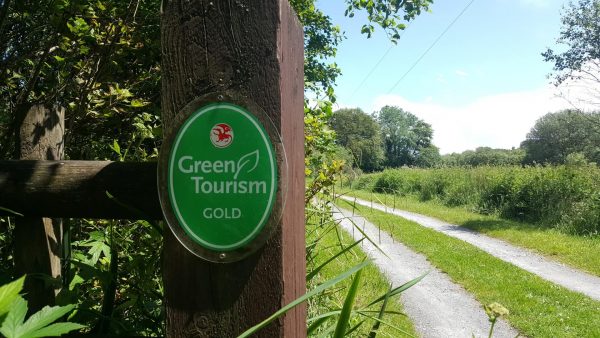
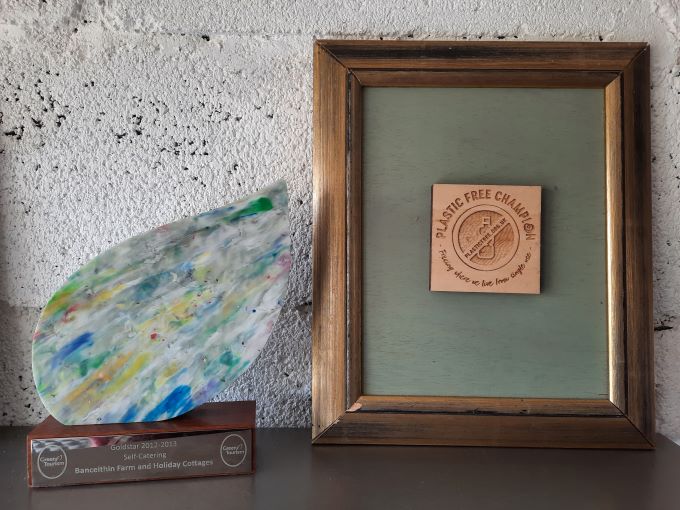
Our commitment to sustainability is as strong as ever. We are proud to have been a Gold Member of the Green Tourism Scheme since 2011, winning their Best Self-Catering Accommodation Goldstar Award.
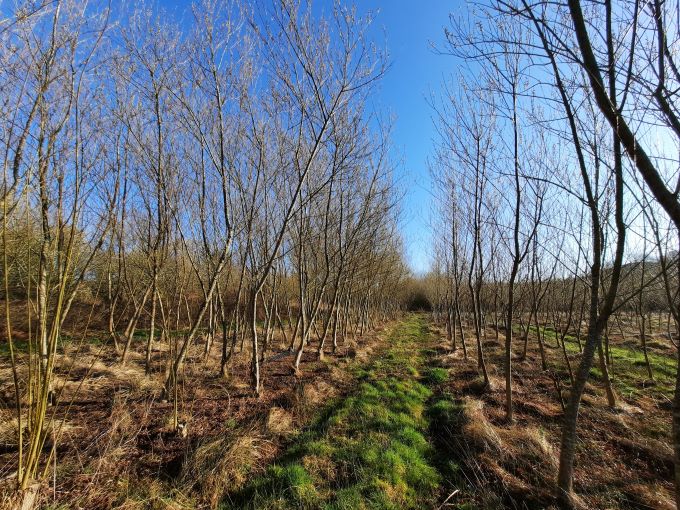
Energy: – Heating and hot water are provided by a wood-fired boiler in a carbon-neutral, district heating system. For Cwt Mochyn cottage, this system is supported by solar thermal tubes installed on the roof that supply the majority of its hot water needs in the spring and summer months. – Currently, all wood we burn in the boiler is sourced from a local certified supplier and is from managed hardwood forests or tree surgeons, supplemented by logs from fallen or felled diseased trees on our own land. However, in spring 2016, we began a project to manage our acres of wet grassland. We dismissed the idea of draining the land for additional grazing or creating a fishing lake because of the potential adverse impact on the existing ecosystem. As an alternative means of making some of the land more productive, we planted a variety of willow to coppice on a rolling annual cycle, which we hope will make us self-sufficient for up to 25% of our annual wood supply.
- Electricity is sourced from a green supplier on a 100% green energy tariff. A 4kWh 22-panel solar photovoltaic array provides electricity all year round for the main house, including the boiler and related systems that run the cottage heating and hot water, with any surplus being fed back into the National Grid. The panels perform consistently year after year, generating more electricity than the cottages consume.
Sustainable purchasing: The original renovation and furnishing of the cottages in 2009-2010, was done with sustainability in mind, but having given up our jobs and income to change our lives, we were constrained by our budget. l building stone, roof tiles, and timbers of the farm buildings were saved and re-used. All new wood, including flooring, was Forest Stewardship Council (FSC) certified, and we used minimal/low VOC or VOC free wall paint throughout. – Much of the furniture was second-hand or upcycled, the most notable pieces being sourced through a Welsh business that specialised in rescuing and reclaiming furniture from landfill and house clearances, and the glassware and crockery were purchased at charity and antique shops. Back then, more often than not, sustainability and affordability were mutually exclusive. Green options were limited and harder to find. All of which made sustainable purchasing difficult on such a small scale. Ten years on, wider consumer awareness means more greener options, only now the challenge is seeing through greenwashing to find businesses and people making a real effort to offer genuinely sustainable options. Our guiding principle for every purchase we make for ourselves and the business remains the same as it was at the start – is there a change we could make or innovation we could adopt that is greener than the one before. Today, there are four principles at the core of each purchasing decision:
- do we need to buy, or can we reduce, reuse, repair, or re-use?
- be socially responsible
- be guided by organisations such as Ethical Consumer;
- balance supporting a local or British independent business but buying a less sustainable product against buying online but the most sustainable product we can afford.
The examples below demonstrate how we put these principles into practice across our business.
Social responsibility is also about our place in the wider social framework, and what we can do for the benefit of others: We switched all our personal and business banking from Lloyds and HSBC to ethical banks The Co-operative, Nationwide, and Triodos. The Banceithin Bible is our personally compiled guide to local businesses and communities which we encourage our guests to support during their stay. For every booking we receive, we donate £1 to Compassion in World Farming to support the work they do to end factory farming in the UK and around the world. In the last 6 years, we have raised £776 for CIWF. – We host an RSPB pin badge box in one cottage and have raised over £700 in 10 years. – We collect used stamps for the British Hedgehog Preservation Society to sell for fundraising and encourage our guests to bring us their saved stamps. In the last 8 years, we have sent them nearly 5kg of stamps. Prior to that, we collected over 3Kg of stamps for the RSPB’s Save the Albatross Campaign. That’s a lot of stamps! Before the scheme closed, we collected over 14.5kg of plastic tops from our own and our guests’ milk bottles and donated them to LUSH Cosmetics to be recycled into new cosmetic pots. Toilets in each cottage are twinned with latrines in Africa through Toilet Twinning, who work with Tear Fund to help bring clean water and safe sanitation to the world’s poorest people. After the toilets, will come Tap Twinning.
- We set up and ran fund-raising activities through which we acquired community defibrillators for three local villages. We established and run both local litter-picking groups and the monthly community café. Our next community project is the installation of lifting equipment in villages to assist carers and vulnerable local people in our rural community where ambulance waiting times can be long.
Biodiversity and Environmental Impact
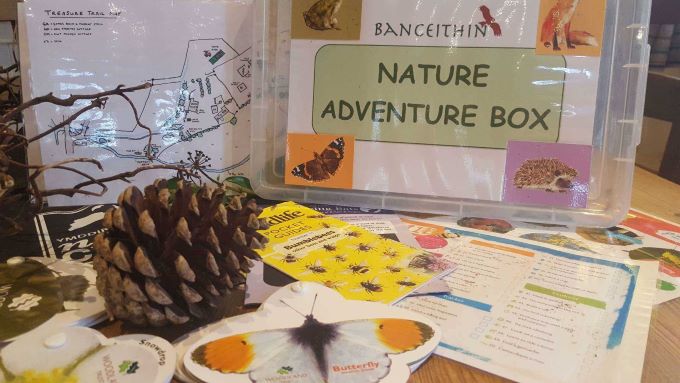
Living in rural West Wales has helped us rediscover a love of the outdoors and wildlife. We believe that protection of wildlife and our surrounding environment is vital to the future of Banceithin, our home county of Ceredigion and to all of us wherever we live. Whilst our aim is to minimise our impact on the environment so that we, you, and future generations can enjoy it, we also want to share our enjoyment of it with others and encourage even more wildlife to make its home here. This is what we’ve done so far: Planted native trees and, for pollinators, planted fruit trees and other bee-friendly shrubs, supplemented by wildflower patches and a cut-flower bed. To encourage families outdoors away from devices, we constructed a treehouse and stream-side boardwalk for den building, and stiles and a stretch of boardwalk to a bench in a secluded corner of our grassland for hiding away with the birds for company; added a giant outdoor chess board made of pallets, stones and painted pebbles as pieces; dug a firepit and provided outdoor cooking facilities; created a Nature Adventure Box full of fun things to do, find and make; built a pond dipping platform over our existing pond, created a smaller wildlife pond and provided a kit for pond and stream dipping; bought Planispheres and star guides, a telescope and binoculars for discovering our dark and starry skies. Binoculars and bird spotting guides are provided; we installed nest boxes around the site and set up feeders in the gardens. We are members of the British Trust for Ornithology, participating in their house martin, tawny owl, and other habitat surveys, including acting as monitor for two local heronies. Created a guide to wildflowers and other forms of wildlife found at Banceithin throughout the year, together with information on the bat species resident on site and guides for identifying butterflies and trees. In 2017, we purchased an additional five acres of neighbouring grassland to protect it from development. We have no plans to drain this for grazing or agriculture. It is home to nesting snipe and other birdlife, especially summer migrants like the grasshopper warbler, and we intend to keep it that way. In 2020, with climate change and its impact on the environment around the world becoming increasingly concerning, we took the decision to stop using pelletised feed for the pigs, sheep and chickens that contains soya protein imported from South America. We switched to feed free of soya, animal by-products, non-GM ingredients, and artificial growth promoters, antibiotics or other drugs.
In essence, the future of our green story is the same as its past; to do more of the above and stay committed to those goals set in 2010:
- to provide high-quality holiday accommodation while minimising the impact on the environment, and
- to run Banceithin and our self-catering cottages as sustainably as possible.
Other people are the future, so our hope is that we can continue to demonstrate that sustainability and comfort can go hand in hand, encouraging others to make just one little change towards a greener lifestyle. There is one ‘big ticket’ item on the list. We don’t yet have the means to buy our own electric vehicles and to date have had only one guest request electric vehicle charging. For that reason, we don’t yet have a charging point on site. However, even in our rural area the EV charging network has improved significantly in the past two years, so we keep this under review and ultimately hope to install a charging point. In the meantime, we continue to enjoy our own e-bikes and offer free charging of electric bikes for any fellow enthusiast who comes to stay. Find out more about green holidays in Wales at Banceithin.
Share this story
Related news & insights
Recent posts
September 18, 2026
August 20, 2026
August 19, 2026
Awareness Days
April 15, 2026
January 22, 2026
Green Stories
August 19, 2026
February 16, 2026
Connect with us
Support